Showing posts with label The Hebrew Bible and Its Music. Show all posts

Saturday, 5 July 2025

After my latest conversation with le chat GPT

 Conclusion: The Role of Music in Semantic Architecture

The analysis of Job 3 shows that the Masoretic cantillation marks, when read as musical rather than merely grammatical signs, articulate a layered architecture of sense. They mark intensity, build thematic strophes, and draw intertextual connections across scenes. The music not only reflects emotional posture but also structures the unfolding of thought, guiding the reader through lament, defiance, and reflection.

Whereas traditional scholarship has emphasized syntactic punctuation and hierarchical trees within verses, the music reveals coherence that transcends these divisions: verse boundaries dissolve, motifs recur, and tonal choices dramatize both theological and literary form. In Job, the protagonist’s refusal to "be referee" (יכח) in the cosmic dispute is matched by a musical refusal of restful beginnings — no verse starts on the subdominant, the often used mid verse rest. The drama plays out not only in the words but in their sounding. This play beginning with creation and its combination of prose and poetry is a miniature of the whole Tanach with its prose sections surrounding the poetry of the Books of Truth.

The teʿamim are not secondary notation but primary signals of biblical prosody and poetics, encoding rhetoric, sensation, and structure in melodic form. Music, in this reading, is not an ornament to 'meaning', but the medium through which the full sense of the text emerges, encompassing body, voice, and memory.

For the entire music of Job verse by verse, see here -- and hey, buy a copy. It's not very expensive.

Sunday, 1 September 2024

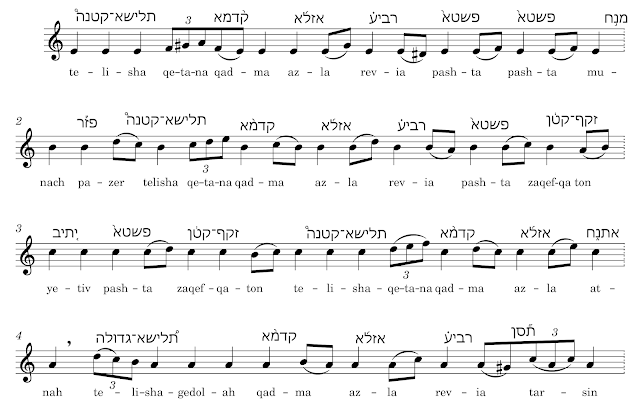
Common sequences on reciting notes e, A, B, C and the poetry of Proverbs chapter 8

Two more tables? One for the prose books. This is a longer post and goes well beyond the zarqa table concept. You might find these words a shrewd comment and warning from wisdom on today's politics.

e: Nehemiah 12:3, B: Ezekiel 46:2, C: 1 Samuel 10:2, A: 2 Samuel 1:4

And one for the poetry books? The ornaments are fewer in the poetry. The musical lines are on average half the length of the lines in the prose books. There are some scattered parts that could be useful but I think the poetry requires an approach that teaches the accents under the text and a few of the ornaments will show up. So I chose Proverbs 8 as example.

And useful as the 'zarqa' tables are for learning the shapes of the accents and the names, I want to leave the do-re-mi or la-la-la (a not very good practice we used to do for learning our parts without the words when we were beginners) approach behind. (Constructing these tables is a trial for my eyesight and memory. I need to extend my program to do it -- big job.)  The repetition and variations on the move to the subdominant and the return to the tonic are quite obvious. Also standing out in the ornaments are the revia-mugrash and the ole-veyored, accent pairs used in the three books only, where they occur or not. So here is the whole of the chapter to ponder.

Note how short the lines are for the most part - see the syllable counts in the center column.

Note verse 13, where the ole-veyored defines a pause on the second degree of the scale, the supertonic.

Proverbs 8, the first use of the cadence on the supertonic. (corrected)

Unfortunately, you can't see this structure clearly in the text without the accents. A bi-colon, a verse with only one pause, looks the same in translation whether the pause is on the atnah or on the supertonic. The above verse has only the cadence on the supertonic - and a long second part, but it's still a two-stich verse, aka bi-colon. 

There are two tri-cola. Can you see them? They are clear in the text below and the music. In the text below, cadences on the second and the fourth notes of the scale are marked by a 'carriage return' (now that's an anachronistic term!). The accents give us structure and the music can be partially seen even in textual form with a little clue here and there. There is a possibility, and I have marked it manually in the generated music, to count other accents as having some pausal value and to therefore break up the longer lines. The pausal value of any accent, apart from the known cadences, ole-veyored, atnah, and silluq, is variable depending on what the text, its context, and the sense the music want to convey.

In the text, I also include a note (♪) so you can be warned when the first syllable of a verse begins on a note other than the default e. This tells you connections between the verses. Notice also the verses that have no internal cadence. There is only one syllable count for the verse and no internal line-feeds. 

(I have set selected verses from this music. You can hear the video - mechanical reproduction -- here. As far as I know, there are no other arrangements or performances from Proverbs available from the work of Suzanne Haïk-Vantoura.)

1 Does not wisdom call,
and understanding give her voice?
א הלֽא־חכמ֥ה תקר֑א
ו֝תבונ֗ה תת֥ן קולֽה
6
7
a hloa-kcmh tqra
utbunh titn qolh
2 At the head, from the high ground, by a way,
the house of pathways, she stands firm.
ב בראש־מרומ֥ים עלי־ד֑רך
ב֖ית נתיב֣ות נצֽבה
8
7
b braw-mromim yli-drç
bit ntibot nixbh
3 From the hand at the gates, to the edge of the town,
at the entrance of the doors, she shouts.
ג ליד־שער֥ים לפי־ק֑רת
מב֖וא פתח֣ים תרֽנה
8
8
g lid-wyrim lpi-qrt
mboa ptkim tronh
4 To each and every one of you I call,
and my voice is to the children of humanity.
ד אליכ֣ם איש֣ים אקר֑א
ו֝קול֗י אל־בנ֥י אדֽם
7
8
d alicm aiwim aqra
vqoli al-bni adm
5 Let simpletons be made to understand craftiness,
and let dullards be made to understand heart.
ה הב֣ינו פתאי֣ם ערמ֑ה
ו֝כסיל֗ים הב֥ינו לֽב
8
7
h hbinu ptiim yormh
ucsilim hbinu lb
6 ♪g Hear, because evidence I will speak,
and the opening of my lips, uprightness.
ו ש֭מעו כֽי־נגיד֣ים אדב֑ר
ומפת֥ח ש֝פת֗י מישרֽים
9
9
v wmyu ci-ngidim adbr
umptk wptii miwrim
7 Because my palate meditates truth,
and wickedness is an abomination to my lips.
ז כֽי־א֭מת יהג֣ה חכ֑י
ותועב֖ת שפת֣י רֽשע
6
9
z ci-amt ihgh kici
vtoybt wptii rwy
8 All the promises of my mouth are in righteousness.
There is no guile or deviousness in them.
ח בצ֥דק כל־אמרי־פ֑י
א֥ין ב֝ה֗ם נפת֥ל ועקֽש
7
8
k bxdq cl-amri-pi
ain bhm nptl vyiqw
9 all of them straightforward, understandable,
and upright as a source of knowledge.
ט כל֣ם נ֭כחים למב֑ין
וֽ֝ישר֗ים למ֣צאי דֽעת
8
8
T culm ncokim lmbin
viwrim lmoxai dyt
10 Receive my mentoring and not silver,
so knowledge over bullion, choose.
י קחֽו־מוסר֥י ואל־כ֑סף
ו֝ד֗עת מחר֥וץ נבחֽר
8
8
i qku-musri val-csf
vdyt mkrux nbkr
11 Because good is wisdom over rubies,
and all delights are not to be considered equal in her.
יא כֽי־טוב֣ה ח֭כמה מפנינ֑ים
וכל־ח֝פצ֗ים ל֣א יֽשוו־בֽה
7
9
ia ci-Tobh kcmh mpninim
vcl-kpxim la iwvu-bh
12 I, wisdom, I dwell with craftiness,
and I find out knowledge of schemes.
יב א‍ֽני־ח֭כמה שכ֣נתי ערמ֑ה
וד֖עת מזמ֣ות אמצֽא
8
8
ib ani-kcmh wcnti yormh
vdyt mzimot amxa
13 The fear of Yahweh is to hate evil
Pride, and pomp, and the way of evil and a changeable mouth I have hated.
יג יֽרא֣ת יהוה֮ שֽנ֫את ר֥ע
ג֘א֤ה וגא֨ון וד֣רך ר֭ע ופ֨י תהפכ֬ות שנֽאתי
7
17
ig irat ihvh wnaot ry
gah vgaon vdrç ry upi thpucot wnati
14 Counsel is mine and enterprise.
I am understanding. Valour is mine.
יד לֽי־ע֭צה ותושי֑ה
אנ֥י ב֝ינ֗ה ל֣י גבורֽה
6
8
id li-yxh vtuwiih
ani binh li gburh
15 ♪g In me sovereigns reign,
and rule-makers decree righteousness.
טו ב֭י מלכ֣ים ימל֑כו
ו֝רוזנ֗ים יח֣קקו צֽדק
7
8
Tv bi mlcim imlocu
vroznim ikoqqu xdq
16 ♪g In me nobility influence,
and princes, all you who judge righteousness.
טז ב֭י שר֣ים יש֑רו
ו֝נדיב֗ים כל־ש֥פטי צֽדק
6
8
Tz bi wrim iworu
undibim cl-wopTi xdq
17 ♪g I myself love those who love me,
and those who seek me early will find me.
יז א֭ני אהב֣י אה֑ב
ו֝משחר֗י ימצאֽנני
7
8
iz ani aohbii ahb
umwkrii imxaunni
18 Riches and glory are with me,
durable value and righteousness.
יח עֽשר־וכב֥וד את֑י
ה֥ון ע֝ת֗ק וצדקֽה
7
6
ik yowr-vcbod aiti
hon ytq uxdqh
19 ♪B My fruit is better than bullion and than pure gold,
and my income than choice silver.
יט ט֣וב פ֭ריי מחר֣וץ ומפ֑ז
ו֝תבואת֗י מכ֥סף נבחֽר
9
9
iT Tob prii mkrux umpz
utbuati mcsf nbkr
20 I walk in a path of righteousness,
in the midst of pathways of judgment,
כ באֽרח־צדק֥ה אהל֑ך‬
ב֝ת֗וך נתיב֥ות משפֽט
9
7
c baork-xdqh ahlç
btoç ntibot mwpT
21 to make those loving me inherit what is,
so I fill their treasuries.
כא להנח֖יל אהב֥י י֑ש
ואצר֖תיה֣ם אמלֽא פ
7
9
ca lhnkil aohbii iw
vaoxrotihm amla p
22 Yahweh bought me, the beginning of his way,
preceding his work from then.
כב יֽהו֗ה ק֭נני ראש֣ית דרכ֑ו
ק֖דם מפעל֣יו מאֽז
9
7
cb ihvh qnni rawit drco
qdm mpyliv maz
23 ♪g From everlasting I have offered libation from the beginning, out of the precedents of earth.
כג מ֭עולם נס֥כתי מר֗אש מקדמי־אֽרץ 12
cg myolm niscti mraw mqdmi-arx
24 When there were no abysses, I was birthed,
when there were no springs, heavy with water.
כד באין־תהמ֥ות חול֑לתי
בא֥ין מ֝עינ֗ות נכבדי־מֽים
8
9
cd bain-thomot kollti
bain myiinot ncbdi-mim
25 From ere hills were ringed,
before the presence of hillocks, I was birthed.
כה בט֣רם הר֣ים הטב֑עו
לפנ֖י גבע֣ות חולֽלתי
8
8
ch bTrm hrim huTbyu
lpni gbyot kollti
26 While he had not made earth or outsides,
or the preeminent fauna of the world.
כו עד־ל֣א ע֭שה א֣רץ וחוצ֑ות
ו֝ר֗אש עפר֥ות‬ תבֽל
9
6
cv yd-la ywh arx vkuxot
vraw yprot tbl
27 In the establishing of the heavens, there am I,
when he engraved the ambit on the face of the abyss.
כז בהכינ֣ו ש֭מים ש֣ם א֑ני
בח֥וקו ח֝֗וג על־פנ֥י תהֽום
9
9
cz bhcino wmiim wm ani
bkuqo kug yl-pni thom
28 When he assured the skies from above,
in the strength of the springs of the abyss.
כח באמצ֣ו שחק֣ים ממ֑על
ב֝עז֗וז עינ֥ות תהֽום
9
7
ck bamxo wkqim mmyl
byzoz yinot thom
29 In his defining to the sea his decree, and the waters not to bypass his mandate,
when he engraved the foundations of earth,
כט בש֘ומ֤ו לי֨ם חק֗ו ו֭מים ל֣א יֽעברו־פ֑יו
ב֝חוק֗ו מ֣וסדי אֽרץ
14
7
cT bwumo lim kuqo umim la iybru-piv
bkuqo mosdi arx
30 And I was next to him as confidante,
and I was reveling day by day,
gamboling in his presence all the time,
ל וֽאהי֥ה אצל֗ו א֫מ֥ון
וֽאהי֣ה ש֭עשעים י֤ום י֑ום
משח֖קת לפנ֣יו בכל־עֽת
7
9
10
l vahih axlo amon
vahih wywuyim iom iom
mwkqt lpniv bcl-yt
31 ♪g gamboling in the world of his earth,
reveling with the children of humanity.
לא מ֭שחקת בתב֣ל ארצ֑ו
ו֝שעשע֗י את־בנ֥י אדֽם פ
9
11
la mwkqt btbl arxo
vwywuyii at-bni adm p
32 So now, children, hear of what is mine.
Happy are those keeping my ways.
לב ועת֣ה ב֭נים שמעו־ל֑י
ו֝אשר֗י דרכ֥י ישמֽרו
8
9
lb vyth bnim wmyu-li
vawri drcii iwmoru
33 Hear chastening and be wise, and do not be negligent.
לג שמע֖ו מוס֥ר וחכ֗מו ואל־תפרֽעו 13
lg wmyu musr vkcmu val-tpryu
34 ♪f Happy a human that has heard of what is mine,
to be alert at my gateways day by day,
to watch from the posts of my doors.
לד א֥שֽרי אדם֮ שמ֪עֽ֫ ל֥י
לשק֣ד על־ד֭לתתי י֤ום י֑ום
ל֝שמ֗ר מזוז֥ת פתחֽי
8
8
8
ld awri adm womy li
lwqod yl-dltotii iom iom
lwmor mzuzot ptkii
35 ♪B For who finds me finds life,
and will draw forth acceptance from Yahweh.
לה כ֣י מ֭צאי מצ֣א‬ חי֑ים
וי֥פק ר֝צ֗ון מיהוֽה
7
8
lh ci moxai mxa kiim
vipq rxon mihvh
36 ♪g But who sins against me does itself violence.
All who hate me love death.
לו וֽ֭חטאי חמ֣ס נפש֑ו
כל־מ֝שנא֗י א֣הבו מֽות פ
7
10
lv vkoTai koms npwo
cl-mwnaii ahbu mvvt p

Saturday, 22 May 2021

Back to the accents over and under the Hebrew text of the Bible

 We must have been here before. But why do I think I am missing the basic visual facts of these marks of taste? Because I hear conversations where we are either tied up in knots over naming these marks, or tied up in melismata over interpreting them. Updated 2024-08-18 : it's really difficult to get these right because there is a lot of confusion in the names and in the coding. 

Here's the table of accents again. 

The Accents of the Hebrew Bible relating to the Music


Below the text- Governs recitation pitch

Above the text- Ornament relative to the recitation pitch


Reciting
Note


Unicode

14||

Accent name


Abbreviation

Shape

Full name

Unicode

14||


c*

֧

47

דַּרְגָּ֧א

darga

֝֗

ger-rev**

+2+0-1+0

revia-mugrash

37-31

רְבִ֝יעַ֗־מֻגְּרַשׁ


d*

֛

35

תְבִ֛יר

tevir

֙

pas*

+0+1

pashta

33

פַּשְׁטָא֙


d

֪

50

יֶרַח גָ֛לגַל

yerah

(galgal)

֝

ger

+2+0

geresh muqdam

37

גֵ֝רֵשׁ־מֻקדַם


e

ֽ

69

סִלּוּֽק

silluq

֜

azl*

+0+2

azla

36

אַזְלָ֜א


f/f#

֥

45

מֵרְכָ֥א

merkha

֞

tar*

+2+0+2

tarsin

(gershaim)

38

תַ֞רְסִן 

גֵּרְשַׁ֞יִם


g**

֭

53

דְּחִי

d'khi

֡

paz

+2+1

pazer

41

פָּזֵ֡ר


g/g#

֖

30

טִפְּחָ֖א

tifha

֔

z-q*

-1

zaqef-qatan

28

זָקֵף קָטֹ֔ן


A

֑

25

אֶתְנַ֑חְ

atnah

֕

z-g*

-1-2

zaqef-gadol

29

זָקֵף גָד֕וֹל


B

֣

43

מֻנַּ֣ח

munah

֨

qad

+1-0

qadma


48

קַדְמָ֨א


C*

֚

34

יְ֚תִיב

yetiv

֒

seg*

-1-0-1

segol

26

סֶגּוֹל֒


C

֤

44

מַהְפַּ֤ךְ

mahpakh

֘

zar

-1+1-0

zarqa

32

זַרְקָא֘


dm*

֦

46

מֵרְכָ֦א־ כְפוּלָה

merkha kefulah

֮

tsi

-0-1+1

tsinnor

54

צִנּוֹר֮


֩

t-q*

+1+2+3

telisha qetana

49

תְּלִישָׁא־ קְטַנָּה֩


֠

t-g*

+3+2+1

telisha gedolah

40

תְּלִישָׁא־ גְדוֹלָה


֟

qar*

+1+2+3+3+2+1

qarne farah

39

 קַרְנֵֽי־פָרָ֟ה


֓

shl

-3-2-1

shalshelet

27

שַׁלְשֶׁ֓לֶת


֬

ill**

+4

illuy

52

עִלּוּ֬י


֫

ole**

+3+0

ole

51

עוֹלֶ֫ה


֗

rev

-0-1 prose

-1+0 poetry

revia

31

רְבִיעַ֗


If the accents under the text are a scale, then there is an implied harmonic substructure to be discovered. The deciphering key inferred by Suzanne Haïk-Vantoura shows this underlying harmonic structure. Given a trained musical ear, her selection passes the tonus peregrinus test.

Even given the scale, there is a great deal more to discover about the usage of the accents. Some of what can be discovered is illustrated by the music I have developed and transcribed using the deciphering key inferred by Suzanne Haïk-Vantoura. This blog contains enough examples to see the clarity and potential impact of her work.

See also my series on the Ladder or see volume 10 of the translation series, The Progression of the Music. This book lays out motifs and phrases used for every verse of Scripture and shows where they are unique and where they are identical. For an introduction to the deciphering key and the rationale behind it please see The Song in the Night.