Monday, 4 September 2023

#Psalmtweet #Psalter 4:3


Psalms 4:6 A rebuke. Sung here. 
בְּנֵ֥י אִ֡ישׁ עַד־מֶ֬ה כְבוֹדִ֣י לִ֭כְלִמָּה תֶּאֱהָב֣וּן רִ֑יק
תְּבַקְשׁ֖וּ כָזָ֣ב סֶֽלָה
3 Children, each of you, how long will you humiliate my glory? your love empty?
your seeking a lie? Selah.
g bni aiw yd-mh cbodi lclimh tahbun riq
tbqwu czb slh
16
7
bn\i aiw yd mh cbvd\i l/clm\h t/ahb\vn riq
t/bqw\v czb slh

(The performer has chosen a differing mode and there are some accent differences due to the Letteris edition that she is singing).

Sunday, 3 September 2023

#Psalmtweet #Psalter 3:6

Psalms 3:6 - a performance of the psalm is available here.

 This verse is a tri-cola with cadences on the supertonic and the subdominant. It has a very short second colon, one word, four syllables. David has enemies -- as do we, but he can sleep, and awaken.

אֲנִ֥י שָׁכַ֗בְתִּי וָֽאִ֫ישָׁ֥נָה
הֱקִיצ֑וֹתִי
כִּ֖י יְהוָ֣ה יִסְמְכֵֽנִי
6 I lie down and I sleep.
I awake,
for Yahweh supports me.
v ani wcbti vaiwnh
hqixoti
ci ihvh ismcni
9
4
7
ani wcb\ti va/iwn\h
h/qix\vti
ci ihvh i/smc\ni


Saturday, 2 September 2023

#Psalmtweet #Psalter 2:6

The music of this verse begins on a note other than the tonic. My thesis is that this indicates a special connection with the prior verse.  (See this post.) You can see the music for the whole psalm here. The first 6 verses are all connected in this way. It is as if each verse is annotated with the instruction attacca.
וַ֭אֲנִי נָסַ֣כְתִּי מַלְכִּ֑י
עַל־צִ֝יּ֗וֹן הַר־קָדְשִֽׁי
6 ♪g I myself have offered as libation my own king,
on Zion, my holy hill.
v vani nscti mlci
yl-xion hr-qodwi
8
6
v/ani nsc\ti mlc\i
yl xivn hr qdw\i
Psalms 2:6

Friday, 1 September 2023

#Psalter 1:3

Psalms 1:3 You can hear Psalm 1 performed here.
וְֽהָיָ֗ה כְּעֵץ֮ שָׁת֪וּל עַֽל־פַּלְגֵ֫י־מָ֥יִם
אֲשֶׁ֤ר פִּרְי֨וֹ ׀ יִתֵּ֬ן בְּעִתּ֗וֹ וְעָלֵ֥הוּ לֹֽא־יִבּ֑וֹל
וְכֹ֖ל אֲשֶׁר־יַעֲשֶׂ֣ה יַצְלִֽיחַ
3 Such a one is like a tree transplanted by streams of water,
that gives its fruit in its time and its leaf does not wither.
And in all that it does, it thrives.
g vhih cyx wtul yl-plgi-mim
awr priio iitn byito vylhu la-iibol
vcol awr-iywh ixlik
11
15
10
v/hih c/yx wtl yl plg\i mim
awr pr\iv i/tn b/yt\v v/ylh\v la i/bl
v/cl awr i/ywh i/xlk

The first line, in a low tessitura, cadences in bar 4 (on the word mim) on the supertonic. This cadence, called ole veyored covers two accents, the first above the text and the second below. The combination is used only in the three poetry books, Psalms, Proverbs, and the speeches of Job. Only in these books do we see these tri-cola, the first cadence on the second note of the scale, and the second on the subdominant, the fourth note of the scale.

The second musical line, beginning in the last beat of bar 4, ascends to the sixth in joy at the unfading fruitfulness of the one who delights in the instruction of Yahweh. The cadence and pause on the subdominant is marked (bar 8).

The final musical line returns to the tonic. For an introduction to the music, please see here. 


Wednesday, 23 August 2023

The Music of the Law (Exodus 20:12-17)

Glorify! The word is cbd glory. If glory and honour are synonyms, maybe we should rethink the translations of the 16th century. There is another root hdr that is specific to honour.

Note always where the music comes to a cadence. There you have time to think. Notice here the recitation on the rest note, the subdominant. That recitation is a metaphor for the prolonged days.
כַּבֵּ֥ד אֶת־אָבִ֖יךָ וְאֶת־אִמֶּ֑ךָ
לְמַ֙עַן֙ יַאֲרִכ֣וּן יָמֶ֔יךָ עַ֚ל הָאֲדָמָ֔ה אֲשֶׁר־יְהוָ֥ה אֱלֹהֶ֖יךָ נֹתֵ֥ן לָֽךְ ס
12 Glorify your father and your mother,
so that prolonged are your days on the ground that Yahweh your God gives to you.
ib cbd at-abiç vat-aimç
lmyn iaricun imiç yl hadmh awr-ihvh alohiç notn lç s
11
27


Note how the commandment begins on the second note of the scale. What is the connection to the prior verse?


לֹ֥֖א תִּֿרְצָֽ֖ח ס 13 ♪f You will not murder.
ig la trxk s 5
A remarkable brevity to these commandments.


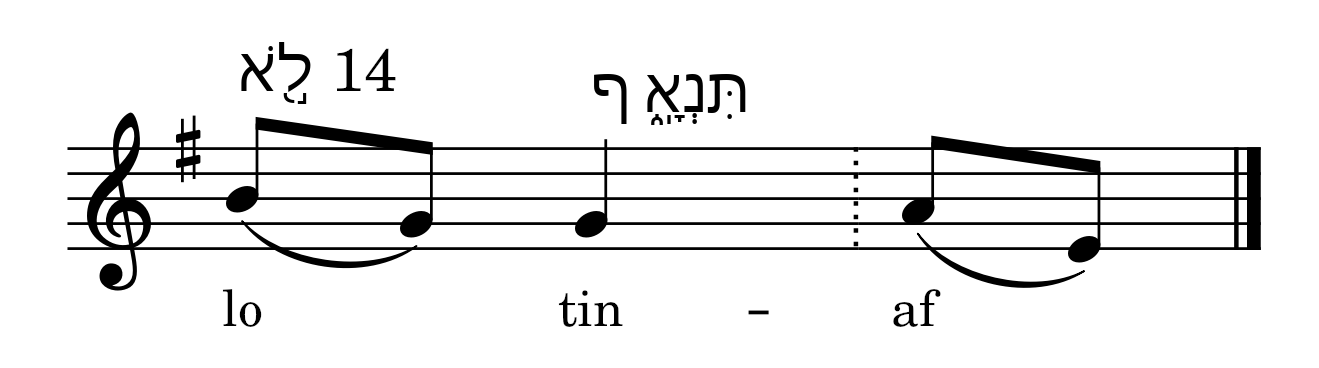
לֹ֣֖א תִּֿנְאָֽ֑ף ס 14 ♪B You will not commit adultery.
id la tnaf s 5
All three show how easy it is to combine reciting notes on a single syllable. I wonder why it was not more frequently done.


לֹ֣֖א תִּֿגְנֹֽ֔ב ס 15 ♪B You will not steal.
'tv la tgnob s 5
Verse 16 is quite straightforward musically.


לֹֽא־תַעֲנֶ֥ה בְרֵעֲךָ֖ עֵ֥ד שָֽׁקֶר ס 16 You will not inflict false witness against your associate.
'tz la-tynh briyç yd wqr s 11
The first note connects this to the whole of the previous verses. 
The rest pont in the verse is on the word friend or associate, ryh - yes, the same word as in the prior commandment. (I avoided using neighbor since I use that gloss for a different root wcn.) I am critical of my translation but these posts are about the music. Now you can sing the 10 commandments in Hebrew.

לֹ֥א תַחְמֹ֖ד בֵּ֣ית רֵעֶ֑ךָ
לֹֽא־תַחְמֹ֞ד אֵ֣שֶׁת רֵעֶ֗ךָ וְעַבְדּ֤וֹ וַאֲמָתוֹ֙ וְשׁוֹר֣וֹ וַחֲמֹר֔וֹ וְכֹ֖ל אֲשֶׁ֥ר לְרֵעֶֽךָ פ
17 ♪f You will not covet the house of your friend,
nor will you covet the wife of your friend or manservant or maidservant or bull or ass or anything that is your friend's.
iz la tkmod bit riyç
la-tkmod awt riyç vybdo vamto vworo vkmoro vcol awr lriyç p
7
31

Tuesday, 22 August 2023

The Music of the Law - Sabbath

 Continuing the journey through Exodus 20.

A single musical phrase for verse 8
זָכ֛וֹר֩ אֶת־י֥֨וֹם הַשַּׁבָּ֖֜ת לְקַדְּשֽׁ֗וֹ 8 Remember the day of the Sabbath to sanctify it.
k zcor at-iom hwbt lqdwo 10
A single musical phrase for verse 9
שֵׁ֤֣שֶׁת יָמִ֣ים֙ תַּֽעֲבֹ֔ד֮ וְעָשִׂ֖֣יתָ כָּל־מְלַאכְתֶּֽךָ֒ 9 ♪C Six days you will serve and do all your affairs,
't wwt imim tybod vywit cl-mlactç 17

Verse 10 is in two parts separated by the cadence on the subdominant in bar 3. This is the first rest in this group of verses -- focusing the rest that is in Yahweh your God.

וְי֙וֹם֙ הַשְּׁבִיעִ֔֜י שַׁבָּ֖֣ת ׀ לַיהוָ֣ה אֱלֹהֶ֑֗יךָ
לֹֽ֣א־תַעֲשֶׂ֣֨ה כָל־מְלָאכָ֡֜ה אַתָּ֣ה ׀ וּבִנְךָֽ֣־וּ֠בִתֶּ֗ךָ עַבְדְּךָ֤֨ וַאֲמָֽתְךָ֜֙ וּבְהֶמְתֶּ֔֗ךָ וְגֵרְךָ֖֙ אֲשֶׁ֥֣ר בִּשְׁעָרֶֽ֔יךָ
10 But the seventh day is the Sabbath of Yahweh your God.
You will not do any trade, you and your son and your daughter, your manservant and your maidservant, and your cattle and your guest that is in your gates.
i viom hwbiyi wbt lihvh alohiç
la-tywh cl-mlach ath ubnç-ubtç ybdç vamtç ubhmtç vgrç awr bwyriç
13
35

Verse 11 is typical prose structure for the commentary on the law. The rest on the subdominant is appropriate for the word seventh.

כִּ֣י שֵֽׁשֶׁת־יָמִים֩ עָשָׂ֨ה יְהוָ֜ה אֶת־הַשָּׁמַ֣יִם וְאֶת־הָאָ֗רֶץ אֶת־הַיָּם֙ וְאֶת־כָּל־אֲשֶׁר־בָּ֔ם וַיָּ֖נַח בַּיּ֣וֹם הַשְּׁבִיעִ֑י
עַל־כֵּ֗ן בֵּרַ֧ךְ יְהוָ֛ה אֶת־י֥וֹם הַשַּׁבָּ֖ת וַֽיְקַדְּשֵֽׁהוּ ס
11 ♪B For six days Yahweh constructed the heavens and the earth, the sea and all that is in them, and he rested on the seventh day.
Therefore Yahweh blessed the Sabbath day and sanctified it.
ia ci wwt-imim ywh ihvh at-hwmiim vat-harx at-him vat-cl-awr-bm vink biom hwbiyi
yl-cn birç ihvh at-iom hwbt viqdwhu s
35
16

The Music of the Law (Exodus 20:4-7)

I am abandoning the idea of grammar. I have nothing to add to existing online sources. What I do have that no one else has is the music. Henceforth, I am deciding, (again), to concentrate on the music. I will continue to correct my translation, but that too is a (continuing) aside. 

The uniqueness and solitude of Yahweh and the holiness of the name.

The music of the law is complex compared to other verses. לְךָ֥֣ and לֹֽ֣א for example each have two changes in reciting note on one syllable. Similarly in the second part of the verse after the rest on the subdominant, two syllables use doubled signs under the text to create an effect that is unique to the section.

לֹֽ֣א תַֽעֲשֶׂ֨ה־לְךָ֥֣ פֶ֣֙סֶל֙ ׀ וְכָל־תְּמוּנָ֡֔ה אֲשֶׁ֤֣ר בַּשָּׁמַ֣֙יִם֙ ׀ מִמַּ֡֔עַל וַֽאֲשֶׁ֥ר֩ בָּאָ֖֨רֶץ מִתַָּ֑֜חַת
וַאֲשֶׁ֥֣ר בַּמַּ֖֣יִם ׀ מִתַּ֥֣חַת לָאָֽ֗רֶץ
4 ♪B You will not make for yourself a graven image or any similitude that is in the heavens above or that is in the earth beneath,
or that is in the waters beneath the earth.
d la tywh-lç psl vcl-tmunh awr bwmiim mmyl vawr barx mtkt
vawr bmim mtkt larx


Verse 5 is a single colon -- there is no rest for the hearer or the singer until the last syllable where the subdominant occurs only for a moment and is immediately brought down to the tonic.
לֹֽא־תִשְׁתַּחְוֶ֥֣ה לָהֶ֖ם֮ וְלֹ֣א תָעָבְדֵ֑ם֒
כִּ֣י אָֽנֹכִ֞י יְהוָ֤ה אֱלֹהֶ֙יךָ֙ אֵ֣ל קַנָּ֔א פֹּ֠קֵד עֲוֺ֨ן אָבֹ֧ת עַל־בָּנִ֛ים עַל־שִׁלֵּשִׁ֥ים וְעַל־רִבֵּעִ֖ים לְשֹׂנְאָֽ֑י
5 You will not worship them and you will not serve them,
for I, Yahweh your God, am a jealous god, visiting the iniquity of forebears on children over three and over four generations to those who hate me.
h la-twtkvvh lhm vla toybdm
ci anoci ihvh alohiç al qna poqd yvon abot yl-bnim yl-wilwim vyl-ribyim lwonaii


The music may pause on the slurred atnah. The software does not insert it in this case.

וְעֹ֥֤שֶׂה חֶ֖֙סֶד֙ לַאֲלָפִ֑֔ים
לְאֹהֲבַ֖י וּלְשֹׁמְרֵ֥י מִצְוֺתָֽי ס
6 And doing mercy for thousands,
who love me and who keep my commandments.
v vyowh ksd lalpim
laohbii ulwomri mxvotii s


Verse 7 reverts to normalcy in the usage of the accents

לֹ֥א תִשָּׂ֛א אֶת־שֵֽׁם־יְהוָ֥ה אֱלֹהֶ֖יךָ לַשָּׁ֑וְא
כִּ֣י לֹ֤א יְנַקֶּה֙ יְהוָ֔ה אֵ֛ת אֲשֶׁר־יִשָּׂ֥א אֶת־שְׁמ֖וֹ לַשָּֽׁוְא פ
7 ♪f You will not lift up the name of Yahweh your God to vanity,
for Yahweh will not hold innocent who lifts up his name to vanity.
z la tiwa at-wm-ihvh alohiç lwva
ci la inqh ihvh at awr-iiwa at-wmo lwva p