First full day of this holiday - on the streets and above the streets in clocks and clock towers
later this evening a few shots of a carnival near the Place des Arts before a sampling of 5 beer types at les 3 brasseurs
Friday, 29 July 2011


Thursday, 28 July 2011
Holiday beginnings
 Delayed at the airport but free wi-fi. On holiday till Aug 20. May post occasionally. Reading The Immortal Life of Henrietta Lacks - marvellous beginning -brilliantly told, very relevant to the life of the past century of race relations and medical science.
The picture is of a tree (in the background) that may not be there when we return. It has a serious fungus that renders its roots unstable. It is a shagbark hickory that has been featured covered with snow on this blog in the past - but I can't find the image at the moment.
| From 2011-07-28 |
Wednesday, 27 July 2011
Creation groaning - God as woman in the Psalter
Hear in your gut
Some arguments remove half my being from me. All the breath-bearing to praise - you recognize that phrase? I am sure you do.
Some arguments remove half my being from me. All the breath-bearing to praise - you recognize that phrase? I am sure you do.
כֹּל הַנְּשָׁמָה תְּהַלֵּל יָהּ
The only other place where I used it in the psalms, Beloved, was to show you how I pant (that's breathing) with the labour of birth for you. Psalm 18.וַיֵּרָאוּ אֲפִיקֵי מַיִם
וַיִּגָּלוּ מוֹסְדוֹת תֵּבֵל
מִגַּעֲרָתְךָ יְהוָה
מִנִּשְׁמַת רוּחַ אַפֶּךָ
Then seen are channels of waters
and discovered are the foundations of the world
at your rebuke יְהוָה
at the breath of the wind of your nostrils
Waters break, foundations discovered, at my rebuke - such as it is. My rebuke is a blessing, like children. You should know. At the breath - the panting - the child bearing - of the wind of my nostrils.
and discovered are the foundations of the world
at your rebuke יְהוָה
at the breath of the wind of your nostrils
Waters break, foundations discovered, at my rebuke - such as it is. My rebuke is a blessing, like children. You should know. At the breath - the panting - the child bearing - of the wind of my nostrils.
'Imagine' I talked that way with you, O Creation Groaning, by my Spirit.
Mind the gap
I have just returned from a mental institution where my youngest son, aged 33 is a patient, impatient, or in patient, breath borne by another mother, but bequeathed to us by adoption. Who is your Mother? A troubled boy, brain-damaged in the scientific sense by alcohol from birth, and by street unwisdom in later life. Would you nurture him? Created time wasted? Why this birth? Why this world where the males seem to know what is right and let their good be evil spoken of?
Righteous rigorous and even gracious evangelicals are to be tolerated but ... but they are unbelievable. (Not to put too fine a point of faith on them.)
Mind the gap
I have just returned from a mental institution where my youngest son, aged 33 is a patient, impatient, or in patient, breath borne by another mother, but bequeathed to us by adoption. Who is your Mother? A troubled boy, brain-damaged in the scientific sense by alcohol from birth, and by street unwisdom in later life. Would you nurture him? Created time wasted? Why this birth? Why this world where the males seem to know what is right and let their good be evil spoken of?
Righteous rigorous and even gracious evangelicals are to be tolerated but ... but they are unbelievable. (Not to put too fine a point of faith on them.)
Tuesday, 26 July 2011
O What Fun!
I realized in my sleep and again after my haircut while riding to the office that with little effort I could produce my glossary in psalm verse order and - hey! - we would have an interlinear.
So the interlinear of my Psalms in full Gematria color with counts of stems and word forms and - Every word accounted for - is now available here
Enjoy - but beware, Beloved, I think it might bias you - but it also might build. God knows how to deal with bias. There is transcription but no vowel points - so you can learn without tying your eyes in knots. And my stems are I think 'mostly' OK - please let me know if you find an error. Also the English can be put together from the glosses. It was my intent. Hopefully, I have not missed any. [now split into the five books - still takes time to load but is more responsive once it's loaded - the advantage of having it on one page is for searching across all psalms]
So the interlinear of my Psalms in full Gematria color with counts of stems and word forms and - Every word accounted for - is now available here
Enjoy - but beware, Beloved, I think it might bias you - but it also might build. God knows how to deal with bias. There is transcription but no vowel points - so you can learn without tying your eyes in knots. And my stems are I think 'mostly' OK - please let me know if you find an error. Also the English can be put together from the glosses. It was my intent. Hopefully, I have not missed any. [now split into the five books - still takes time to load but is more responsive once it's loaded - the advantage of having it on one page is for searching across all psalms]
Sunday, 24 July 2011
The state of affairs in my psalmody
I have synchronized the blog and my database up to psalm 69 and will gradually get to the end of book 2 this week with posts scheduled to August 20 at Poc. It's kind of fun, scheduling posts. You forget that they are coming and you forget that you wrote them - and there they are! With enough blogs one might keep oneself entertained for a while :).
I did what I set out to do when I stopped writing a month ago at psalm 90-91. I have reviewed every usage of every word and touched nearly every psalm in the doing. There are a few English homonyms that are easily distinguishable in context, plenty of helping verbs to ignore and a few verbs with prepositions modifying the verb that distinguish usage. And there are a few Hebrew words where the same word is spelled differently and I have left them separate like heart (lb, lbb) and trouble (cr, crr, crh) and evil (r`, r``). I don't have an easy way to present (or read) the results in English 'root' order, so I sort of have to believe myself. But I expect I might try a clever ordering of the glossary at some point. It would be a confirmation of the analytical function that I wrote. I have left in a few compromises besides the acrostic games and I may introduce a few more. When I do, my single page summary shows me my compromises. So far there is only one: in 39.6 and 69.12 where I use 'make' for 'give'. These I will note by verse when I see them.
Of course this is still an early step in the process - I may elect for various reasons to stand down from this discipline. What if I actually learned something from another source!
The plan: We will be at the end of Book 2 by Aug 18. I will be on holiday so probably won't do much except blog the odd picture from NY and the USA.
I will then write the Book 2 summary as I wrote the quick one for Book 1. Maybe I will put Book 3 on PoC scheduled in August, Sept, Oct. Book 4 would likely carry us to December. But in the period Oct to Dec I am supposed to be researching the Psalter as story - how should I do this? I can't do it if I haven't finished the Psalter so I will have to wait and see what approach to take. Maybe I will need to write the summaries before continuing with any notes apart from individual notes on verses. I am sorry I did not start this way - just notes on verses. It would have helped me remember the tortuous ways of my thoughts and my resources.
I think I will have to push myself to summarize books 3 4 and 5 in September and finish the synchronization of the blog and the database from psalms 73 to 150.
I am just realizing how much time I can save using a bit of java script and cascading style sheets. Nice support from blogger. I just increased the font-size in the Hebrew without hardly lifting a finger!
Any advice?
I did what I set out to do when I stopped writing a month ago at psalm 90-91. I have reviewed every usage of every word and touched nearly every psalm in the doing. There are a few English homonyms that are easily distinguishable in context, plenty of helping verbs to ignore and a few verbs with prepositions modifying the verb that distinguish usage. And there are a few Hebrew words where the same word is spelled differently and I have left them separate like heart (lb, lbb) and trouble (cr, crr, crh) and evil (r`, r``). I don't have an easy way to present (or read) the results in English 'root' order, so I sort of have to believe myself. But I expect I might try a clever ordering of the glossary at some point. It would be a confirmation of the analytical function that I wrote. I have left in a few compromises besides the acrostic games and I may introduce a few more. When I do, my single page summary shows me my compromises. So far there is only one: in 39.6 and 69.12 where I use 'make' for 'give'. These I will note by verse when I see them.
Of course this is still an early step in the process - I may elect for various reasons to stand down from this discipline. What if I actually learned something from another source!
The plan: We will be at the end of Book 2 by Aug 18. I will be on holiday so probably won't do much except blog the odd picture from NY and the USA.
I will then write the Book 2 summary as I wrote the quick one for Book 1. Maybe I will put Book 3 on PoC scheduled in August, Sept, Oct. Book 4 would likely carry us to December. But in the period Oct to Dec I am supposed to be researching the Psalter as story - how should I do this? I can't do it if I haven't finished the Psalter so I will have to wait and see what approach to take. Maybe I will need to write the summaries before continuing with any notes apart from individual notes on verses. I am sorry I did not start this way - just notes on verses. It would have helped me remember the tortuous ways of my thoughts and my resources.
I think I will have to push myself to summarize books 3 4 and 5 in September and finish the synchronization of the blog and the database from psalms 73 to 150.
I am just realizing how much time I can save using a bit of java script and cascading style sheets. Nice support from blogger. I just increased the font-size in the Hebrew without hardly lifting a finger!
Any advice?
Saturday, 23 July 2011
Madonna of the Meadows

but do read and look at this post.
Friday, 22 July 2011
The unmeasurable state of affairs
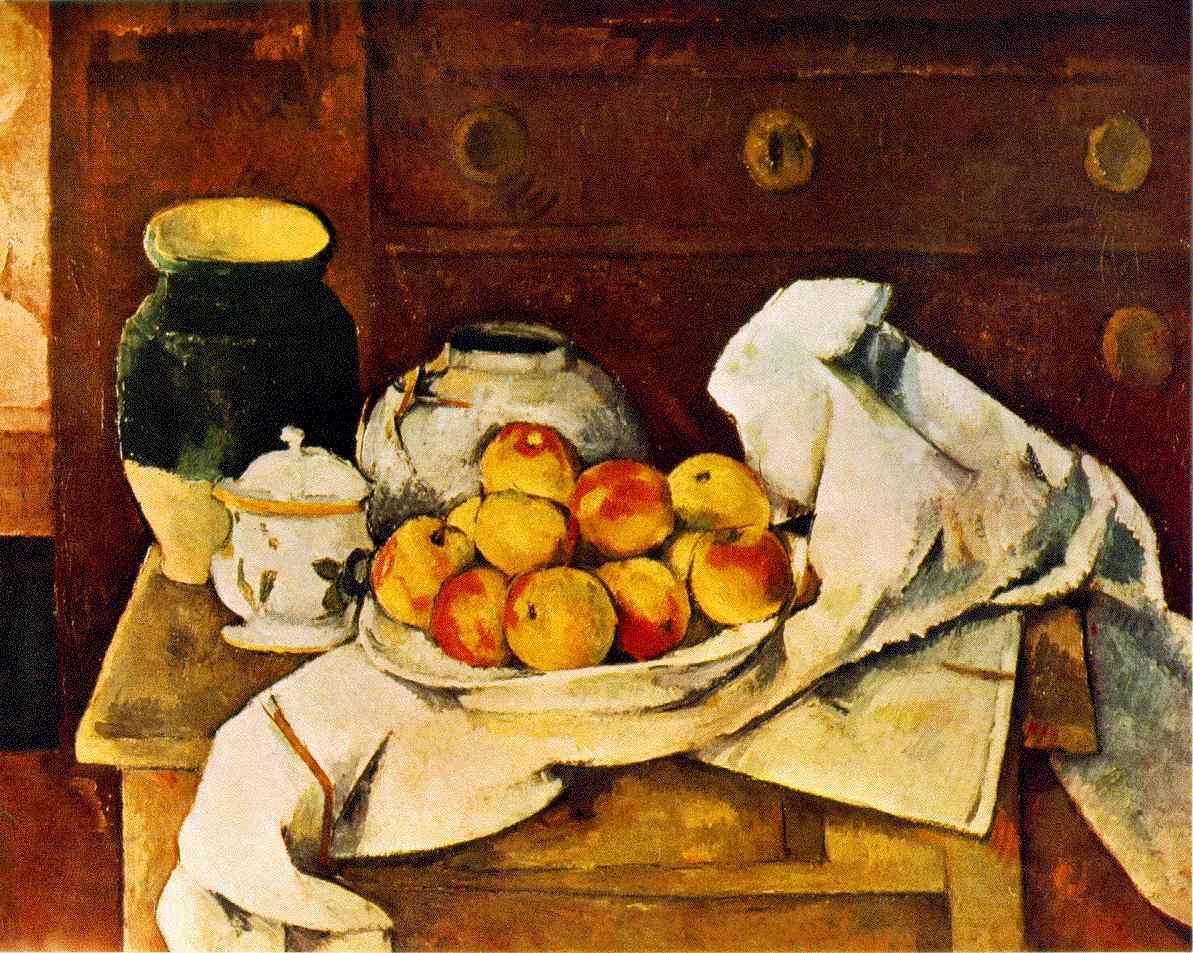
What is this large living still life that I am trying to eat?
I have republished the glossary and lists of frames and I am now randomly republishing individual psalms. In the last two days there were more than 600 changes. I have some confidence that I have found most of the ones I can or should 'fix'. My paint brush had not stopped for nearly a week.
I am going to make notes as brief as possible - if any. But I must move towards both understanding and expressivity. I wonder if that is possible for me.
It is curious to me that I got to psalm 90-91 before 'crashing' with the realization that I must refine the whole before proceeding further. The singular for the merciful one - chasid, never occurs after psalm 86. It is in book 1 and forms a frame of the inner Elohistic Psalter, but only the plural chasidim, a word that dominates the final Hallels. It is as if the Psalter was designed to move from the singular example of self-governance to the full manifestation of the children of God who are known in the mercy and who know how to judge with mercy.
The whole world groans and travails ...
This chasid is one word I have just elected to translate with multiple differing glosses
| חסיד the mercied one | וּדְעוּ כִּי הִפְלָה יְהוָה חָסִיד לוֹ יְהוָה יִשְׁמַע בְּקָרְאִי אֵלָיו | --4.4 | Now set down this: יְהוָה reserved the mercied one as his own יְהוָה will hear when I call to him | 7/21/2011 4:39:23 PM | set down this, literally, 'and know for', an allusion to T.S.Eliot, The Journey of the Magi | ||
| חסיד is the merciful one | הוֹשִׁיעָה יְהוָה כִּי גָמַר חָסִיד כִּי פַסּוּ אֱמוּנִים מִבְּנֵי אָדָם | -12.2 | Save יְהוָה for obliterated is the merciful one for vanished are the faithful among the children of dust | 7/21/2011 4:41:12 PM | vanished, פסס, (pss) a hapax | ||
| חסידך one within your refuge חסיד | כִּי לֹא תַעֲזֹב נַפְשִׁי לִשְׁאוֹל לֹא תִתֵּן חֲסִידְךָ לִרְאוֹת שָׁחַת | -16.10 | for you will not forsake me to the grave You will not allow one within your refuge to see destruction | 7/22/2011 10:18:17 AM | one within your refuge, חסיד (xsyd) the singular merciful one of psalm 4.4, 12.2, 18.26, 32.6, 43.1, 86.2 | ||
| חסיד one who is kind | עִם חָסִיד תִּתְחַסָּד עִם גְּבַר תָּמִים תִּתַּמָּם | -18.26 | with one who is kind you show yourself kind with one who prevails complete you show yourself complete | 7/21/2011 4:44:34 PM | kind, חסיד, the singular merciful one | ||
| חסיד one under mercy | עַל זֹאת יִתְפַּלֵּל כָּל חָסִיד אֵלֶיךָ לְעֵת מְצֹא רַק לְשֵׁטֶף מַיִם רַבִּים אֵלָיו לֹא יַגִּיעוּ | -32.6 | for this every one under mercy will pray to you in a time to be found certainly in the downpour of many waters they will not touch him | 7/22/2011 8:51:04 AM | one under mercy, חסיד, singular, see 16.10 | ||
| חסיד one who is merciful | שָׁפְטֵנִי אֱלֹהִים וְרִיבָה רִיבִי מִגּוֹי לֹא חָסִיד מֵאִישׁ מִרְמָה וְעַוְלָה תְפַלְּטֵנִי | -43.1 | Judge me O God and strive my strife with a nation without one who is merciful from a deceitful and unjust person secure me | 7/21/2011 4:48:35 PM | one who is merciful, חסיד, singular, not necessarily a generic characteristic | ||
| חסיד under your protection | שָׁמְרָה נַפְשִׁי כִּי חָסִיד אָנִי הוֹשַׁע עַבְדְּךָ אַתָּה אֱלֹהַי הַבּוֹטֵחַ אֵלֶיךָ | -86.2 | Guard my life for under your protection am I save your servant you, my God the one trusting in you | 7/21/2011 4:50:13 PM | under your protection, חסיד, the singular one under the חסד, that covenant mercy and loving kindness of יְהוָה |
Subscribe to:
Posts (Atom)
